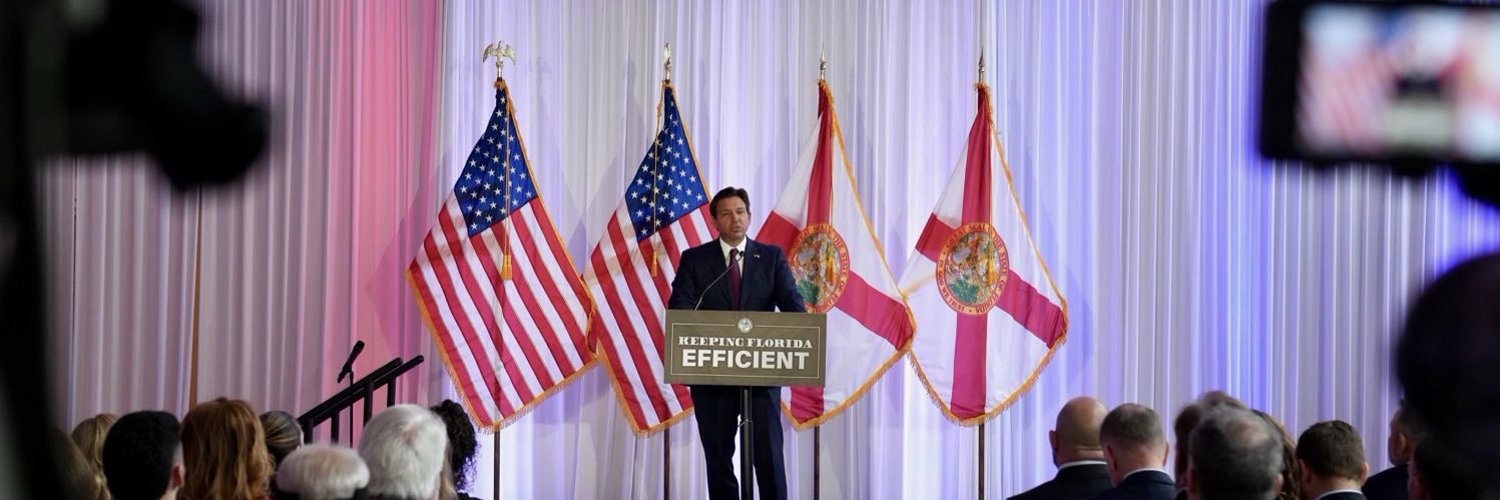
Gov. Ron DeSantis wants Florida's budget surplus spent on tax cuts and local government grants, not locked in a bigger rainy-day fund.
DeSantis posted on X on Sept. 14, calling Amendment 1 "a foolish constitutional amendment proposal" and recommending a no vote. He was responding to the Republican Party of Florida's (RPOF) endorsement of the measure the same day.
The split puts the term-limited governor at odds with his own party ahead of the Nov. 3 general election. Amendment 1 needs 60% of the vote to pass.
How the amendment would raise the cap
The amendment would raise the cap on Florida's Budget Stabilization Fund from 10% of the prior year's general revenue to 25%. According to a Bradenton Times review of the Senate Appropriations Committee's fiscal impact statement, 10% equals roughly $4.9 billion. The 25% cap would be about $12.2 billion.
The measure would require the Legislature to deposit up to $750 million into the fund each fiscal year until the cap is reached. The Senate Appropriations Committee estimated that transfer would continue for at least 10 years if revenue stays flat. Exceptions apply when the fund is tapped after a hurricane, natural disaster or projected budget shortfall.
The Legislature approved the joint resolution (HJR 5019) in 2025 with overwhelming margins: 100-1 in the House and 29-4 in the Senate. Because it is a joint resolution, the governor does not sign or veto it.
DeSantis' case for cutting taxes instead
DeSantis said the state already has a maxed-out rainy-day fund and has run the largest surpluses in state history. He argued surplus revenue should go toward property tax relief, including grants to local governments so homestead properties can be exempt from local property tax. He also floated using surplus dollars to remove tolls.
Earlier in September, DeSantis said the state has a "$117 billion budget and $17-18 billion surplus" and a maxed-out rainy-day fund, according to News4Jax. He said fully offsetting homestead revenue in Florida's 32 rural counties would cost about $200 million a year.
Manatee and Sarasota counties both rely on property tax revenue to fund services. Any state grants offsetting homestead exemptions would flow through county budgets and community development districts.
Why Republicans are defending the amendment
RPOF Chairman Evan Power said in a statement to Florida Politics that the amendment keeps Florida prepared for storms, emergencies and downturns without raising taxes. Then-House Speaker Daniel Perez told reporters in June 2025 that the state was not prepared for the recession in the 2000s. He called the measure "a preparation of being prepared for the unexpected," according to WGCU.
Florida's budget outlook grows more uncertain
The debate comes as Florida's long-term fiscal picture shows strain. A preliminary state outlook reported by the Florida Phoenix projected a $7.1 billion surplus for fiscal year 2027-28, shrinking to $3.4 billion in 2028-29 and flipping to a $1.02 billion projected deficit in 2029-30.
The last time the state tapped the Budget Stabilization Fund was in 2008 during the Great Recession.
What happens next for voters
If approved, Amendment 1 would take effect Jan. 5, 2027. Lakewood Ranch voters will see it on the Nov. 3 ballot alongside Amendment 3, the homestead property tax expansion. Sarasota County Administrator Jonathan Lewis has warned that measure could cost the county $134 million in revenue over two years.




.jpg)